


What Is SWIR Imaging?
Short-wave infrared (SWIR) is a segment of the invisible spectrum — undetectable to the human eye — spanning a typical wavelength range of 0.9 to 1.7 μm. In SWIR imaging, short-wave infrared light strikes an object’s surface, where absorption and reflection produce differentiated signals; a SWIR camera then captures these reflected photons to generate a clear, high-contrast image.
How SWIR Imaging Differs from Thermal Imaging?
Unlike mid-wave infrared (MWIR) and long-wave infrared (LWIR) imaging, which capture the thermal radiation emitted by objects themselves, SWIR imaging works much like a visible light camera — forming images from the light reflected off objects.
What Are the Benefits of SWIR Imaging?
High Recognition, Rich Detail: How SWIR Fills the Gaps in Thermal Imaging
SWIR imaging relies on reflected light, so its output closely resembles a visible light grayscale image — with strong contrast and clearly distinguishable target detail. This effectively fills the gap in target recognition where thermal imaging falls short.
All-weather adaptation with outstanding penetration capability
SWIR is less affected by the scattering of suspended particles such as haze and smoke in the atmosphere, and its Fog penetration and smoke penetration capabilities are significantly superior to those of visible light imaging. In severe weather and low visibility conditions, it can more effectively penetrate interferences and obtain clear images.
Simple Optics, Outstanding Cost-Effectiveness
The glass optical window features extremely high Transmittance in the SWIR band, allowing SWIR cameras to be directly mounted inside the protective window for high sensitivity imaging. Unlike mid-wave and long-wave infrared cameras that require special Optics materials, this solution significantly enhances the flexibility of System Integration while effectively reducing configuration costs.
Spectral Fingerprint Recognition: How SWIR Identifies Materials
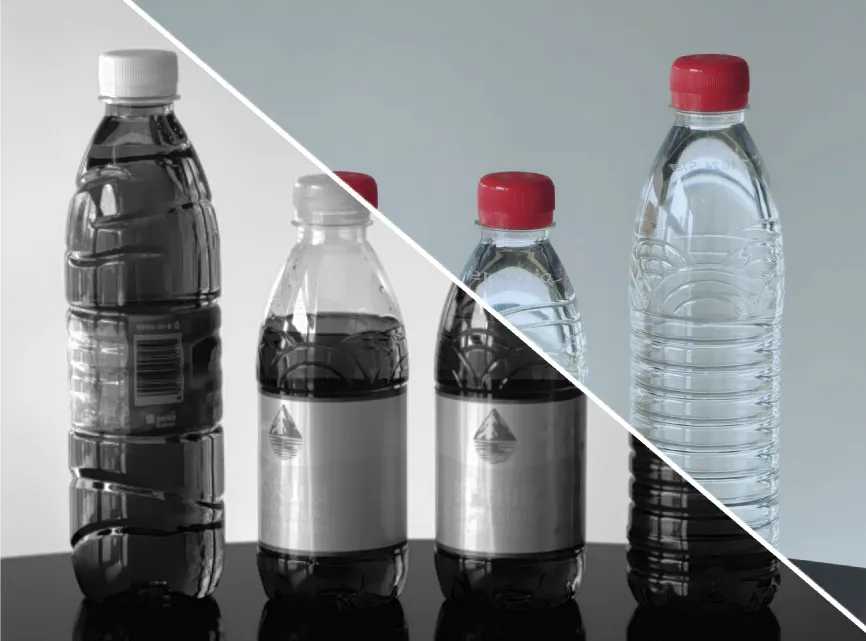
Different substances have unique absorption and reflection characteristics in the short-wave infrared (SWIR) band: water has a strong absorption peak around 1450 nm, and various organic compounds and minerals also have their own distinct spectral signatures. This enables SWIR to not only “see” objects but also accurately “identify” their chemical compositions, which is the core advantage that short-wave infrared (SWIR) has over visible light.
Key Applications of SWIR Imaging: Where Is It Used and Why?
Food Sorting & Foreign Material Detection
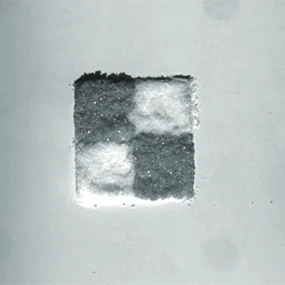
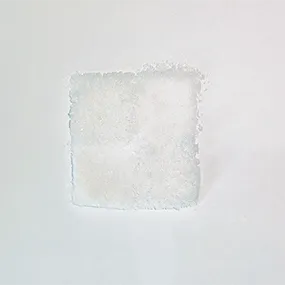
Different grain particles or impurities, such as moisture, protein, starch, and oil, have distinct absorption and reflection characteristics for short-wave infrared light due to their different molecular structures. By detecting these spectral differences, precise recognition and sorting of grain impurities can be achieved. For example, sugar has characteristic absorption in the SWIR band while salt has almost none, so there is a significant difference in phased rollout between the two in SWIR images, which cannot be clearly distinguished in visible light.
Plastic Sorting & Polymer Identification
Plastics, paper, fabrics, wood and other materials have characteristic absorption peaks in the short-wave infrared (SWIR) band. Leveraging its capability for the recognition of material chemical compositions, SWIR technology can accurately distinguish items made of different materials, and realize automated, high accuracy sorting through spectral collection and analysis.
Wafer Inspection: Seeing Through Silicon
During the production process, semiconductor wafers may develop internal issues such as latent cracks and bonding layer defects. These defects are covered by the surface of the Si (Silicon)-based material and cannot be observed under visible light. SWIR can penetrate Si (Silicon) materials. Leveraging this property, SWIR cameras can directly detect defects such as latent cracks and microcracks inside the Wafer, thereby reducing production costs.
Laser Spot Detection & Beam Profiling
Short-wave infrared (SWIR) cameras can perform real-time imaging analysis on laser spots to obtain information on the spot shape, size, energy distribution and position.
Seeing Through Fog and Haze
Short-wave infrared (SWIR) imaging is less affected by atmospheric scattering, and its ability to penetrate fog, haze and smoke is significantly better than that of visible light, with a longer effective Detection range. In severe weather and low visibility conditions (such as fog, haze, sand and dust, and dense smoke from fires), SWIR cameras can still present clear scene images, and are widely used in scenarios such as perimeter security, Fire Rescue, and airport take-off and landing assistance under low visibility conditions.