


In the rapidly evolving machine vision landscape, relying on a single optical spectrum introduces physical constraints that limit edge-computing reliability. High-resolution visible light cameras capture intricate textures and color data but fail under low-light conditions, dense smoke, or high-contrast backlighting. Conversely, uncooled infrared thermal imaging operates independently of ambient light but lacks structural edge details and high-resolution spatial definitions.
To address this gap, we propose an Infrared and Visible Light Dual-Spectrum Fusion architecture that integrates long-wave infrared (LWIR) and visible sensor streams on a unified embedded platform. This approach mitigates the limitations of single-spectrum imaging and provides more reliable all-weather perception for next-generation automated systems.
How Does Dual-Light Fusion Work and What Are Its Technical Advantages?
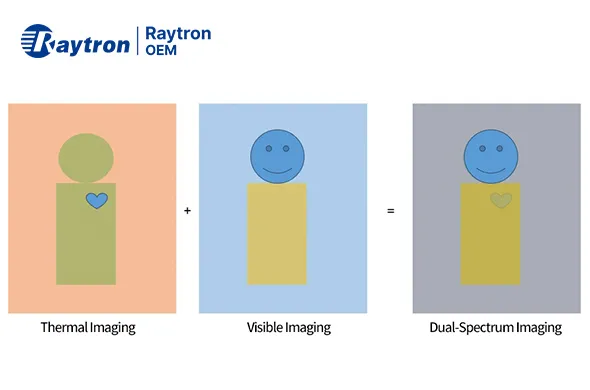
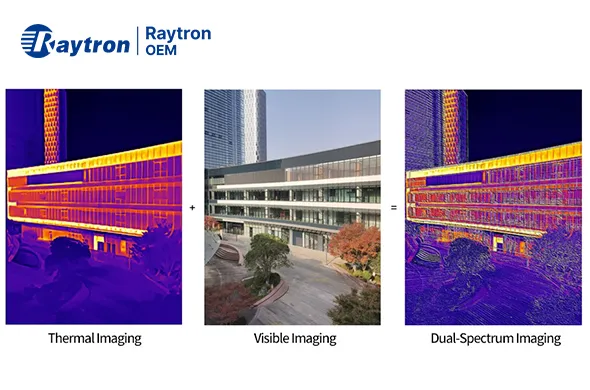
True dual-light fusion goes beyond simple alpha-blending overlay. It requires complex multi-sensor calibration and real-time pixel alignment of heterogeneous data sources to achieve a “1+1>2” output.
Recognizing the strict Size, Weight, Power, and Cost (SWaP-C) limits of commercial and consumer OEM integration, our engineering team has developed two distinct, complementary hardware-software configurations:
1. Auto Focus (AF) Configuration: Dynamic, Pixel-Level Alignment
Engineered for applications demanding strict data integrity, the AF configuration features an active, closed-loop auto-focus mechanism. The system calculates target distances in real time, adjusting the optical lenses dynamically to maintain sharp edge clarity across shifting focal planes. During multi-spectral processing, the proprietary fusion algorithm continuously synchronizes with the focus motor. This prevents edge misalignment, ghosting, and thermal-to-optical displacement, making it the premier choice for industrial inspection robots, sub-surface asset monitoring, and precision diagnostic instruments.
2. Fixed Focus (FF) Configuration: Ultra-Compact & Cost-Engineered
The FF configuration utilizes a streamlined, solid-state fixed-focus design with no moving mechanical parts, offering exceptional shock resistance (up to 1200g) and long-term structural stability. By utilizing static depth-of-field compensation algorithms, the software ensures precise spectral alignment within preset operational ranges. This configuration minimizes the physical sensor footprint and manufacturing costs, providing a balanced, high-volume solution for portable plug-in camera accessories, commercial sensing grids, and smart home appliances.
How Is Dual-Light Fusion Applied in Machine Vision Industries?
By delivering noise-free, high-contrast data matrices directly to edge-computing AI models, [Company Name]’s dual-spectrum architecture is driving performance differentiation across key verticals:
- Smart Living & Consumer Electronics: Powers ultra-compact smartphone plug-ins and smart home infrastructure, delivering consumer-safe thermal mapping, energy auditing tools, and privacy-protected biometric verification that complies with global data security standards.
- Industrial Automation & PCBA Diagnostics: Enables automated test equipment (ATE) and handheld tools to detect microscopic millisecond thermal spikes on powered PCBAs while simultaneously reading component serial numbers via the visible light channel for instant traceability.
- Robotics & Vision-Guided Navigation: Provides crucial sensor redundancy for autonomous guided vehicles (AGVs) operating in unpredictable industrial environments, such as unlit warehouses, cross-docking yards, or foggy outdoor facilities.
What Does Dual-Light Fusion Mean for the Future of Machine Vision?
By advancing multi-spectrum fusion algorithms and optimizing compact sensor hardware, this solution delivers an efficient, one-stop dual-light imaging architecture. The dual availability of AF and FF configurations allows product designers to optimize their systems based on specific precision targets and cost parameters, driving competitiveness in the broader machine vision ecosystem.
About Raytron OEM
Raytron OEM, a wholly-owned subsidiary of Raytron Technology Co., Ltd., is a leader in uncooled infrared thermal imaging. With full-stack capabilities from IC and MEMS sensor design to system integration, we deliver high-performance infrared solutions for industrial monitoring, wildfire prevention, outdoor night vision, consumer electronics, and intelligent sensing. Guided by our mission, “To Create Incremental Value for Customers with Technological Advancements”, we continue to drive innovation and empower smarter, safer, and more efficient systems worldwide. For more on the Raytron Microelectronics program, visit: https://www.raytron-microelectronics.com/contact-us