
1
1


The thermal imaging sensor module enhances a vehicle’s perceptual capabilities in various environments through its night vision and penetration abilities, thus contributing to improving the operational efficiency and safety of public transportation. Simultaneously, it provides critical data for intelligent transportation systems, optimizing traffic flow management.
- Night Vision Capability: The thermal camera module should be capable of producing clear images in complete darkness to enhance vehicle perception during nighttime or low-light conditions.
- Ability to Penetrate Harsh Weather Conditions: The module should maintain high-definition imaging quality in adverse weather conditions such as rain, fog, and smoke, ensuring safe vehicle operations under various weather circumstances.
- Support for Intelligent Transportation Data: Integrated with intelligent algorithms, it can collect and analyze traffic flow data, providing essential information for intelligent transportation systems to optimize traffic management.


The thermal imaging sensor module in the ADAS of special vehicles, such as fire trucks and ambulances, assists drivers in promptly identifying obstacles and hazards during emergencies by utilizing its night vision capabilities and the ability to penetrate adverse weather conditions. This ensures quick responses and safe navigation, thereby enhancing operational efficiency and safety.
- Night Vision Capability: The thermal camera module should have the capacity to produce clear images in complete darkness, aiding special vehicles in navigation under low light or nighttime conditions.
- Harsh Weather Penetration Capability: The module should maintain high-definition imaging in challenging weather conditions such as rain, snow, and fog, ensuring that the driver’s visibility remains unaffected by adverse weather.
- Obstacle and Hazard Recognition: Integrated with intelligent algorithms, it can automatically detect and identify obstacles and potential dangers, issuing timely alerts to improve emergency response speed.
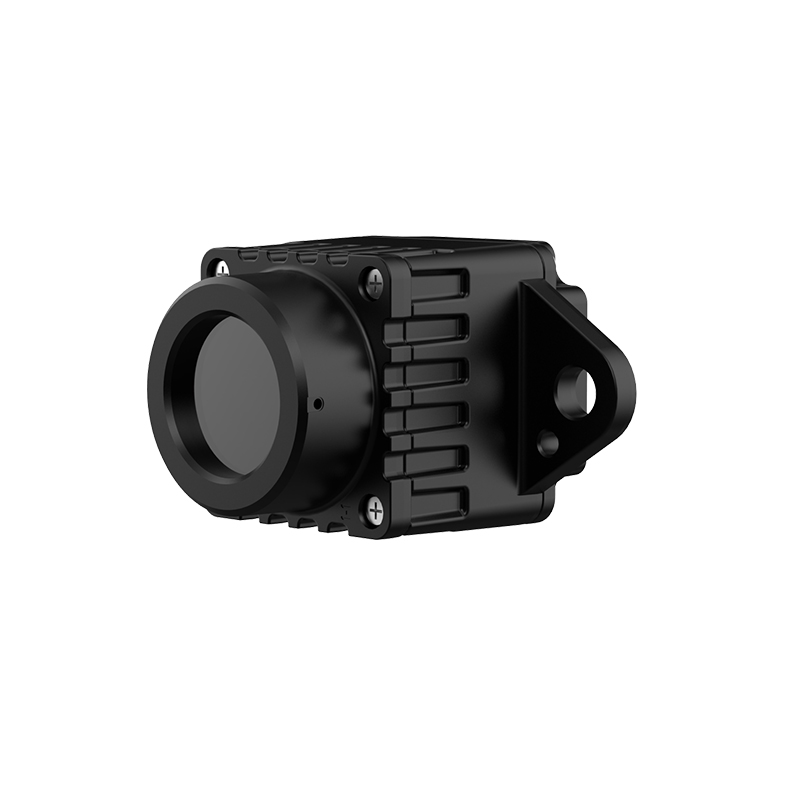


The thermal sensors in ADAS provide capabilities for pedestrian and animal detection by identifying living beings through the detection of thermal radiation differences. This feature is not affected by lighting conditions, effectively enhancing detection accuracy in low visibility situations, such as at night or under poor visibility. It strengthens warning and obstacle avoidance capabilities, significantly improving driving safety.
- Pedestrian and Animal Thermal Radiation Detection: The module can identify living beings by analyzing thermal radiation differences to enhance detection accuracy in low visibility conditions, such as at night.
- Intelligent Algorithm Automatic Alarm: Integrated with intelligent algorithms, it can automatically detect and recognize pedestrians and animals, issuing timely warnings to enhance obstacle avoidance capabilities.
- Resistance to Adverse Weather Interference: The module can operate stably in adverse weather conditions like rain, snow, and fog, maintaining high detection accuracy and system reliability.


In the realm of advanced driving assistance systems (ADAS), infrared thermal modules leverage thermal imaging technology to penetrate fog, rain, and darkness, offering clear images of roads and objects. This enhances the vehicle’s perception capabilities in complex environments, ultimately bolstering driving safety and system responsiveness.
- Penetrating Adverse Weather: The module can be unaffected by fog and rain to provide crisp thermal imaging.
- Intelligent Recognition and Alarming: With support for multi-sensor fusion, it boasts the ability to automatically identify pedestrians and obstacles while issuing alerts.
- Glare-Resistant Technology: Ensuring image clarity even in high light conditions, unaffected by glare.
- Swift Data Processing: Guaranteeing rapid data processing to elevate system response speed.


In the realm of autonomous driving, thermal camera modules capture objects’ thermal radiation, enabling clear recognition of road conditions and surrounding objects even in nighttime or adverse weather conditions. This enhances the vehicle’s environment-sensing performance, thereby improving the safety and reliability of autonomous driving.
- Long-Distance Visual Range: Thermal camera modules should possess the ability to penetrate darkness, ensuring the distant recognition of road conditions and surrounding objects even at night or in adverse weather conditions.
- Intelligent Algorithm for Automatic Recognition and Alarm: Integrated intelligent algorithms can automatically detect and identify pedestrians and other obstacles, issuing timely alerts to enhance ADAS response speed and accuracy.
- Glare Resistance: The module should feature anti-glare functionality to ensure stable operation in harsh environmental conditions such as rain, snow, fog, haze, and sandstorms, thereby enhancing the reliability of autonomous driving.