


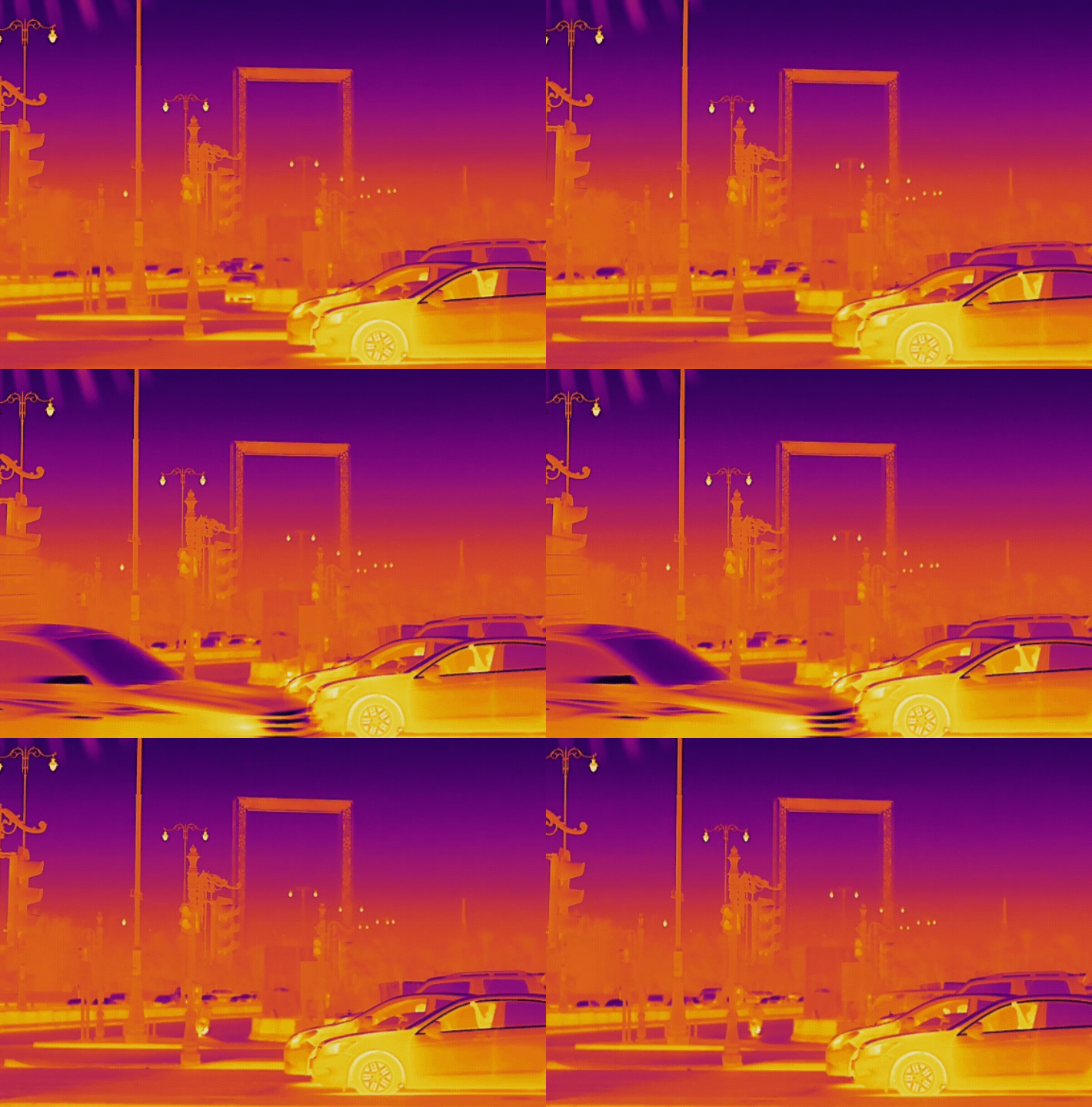
Why Do Thermal Images Freeze During Operation?
During prolonged operation, infrared thermal imaging systems are affected by factors such as ambient temperature changes and device aging. As a result, the output and response characteristics of the infrared focal plane array (FPA) drift, leading to high- and low-frequency image noise, inaccurate temperature measurement, and other issues.
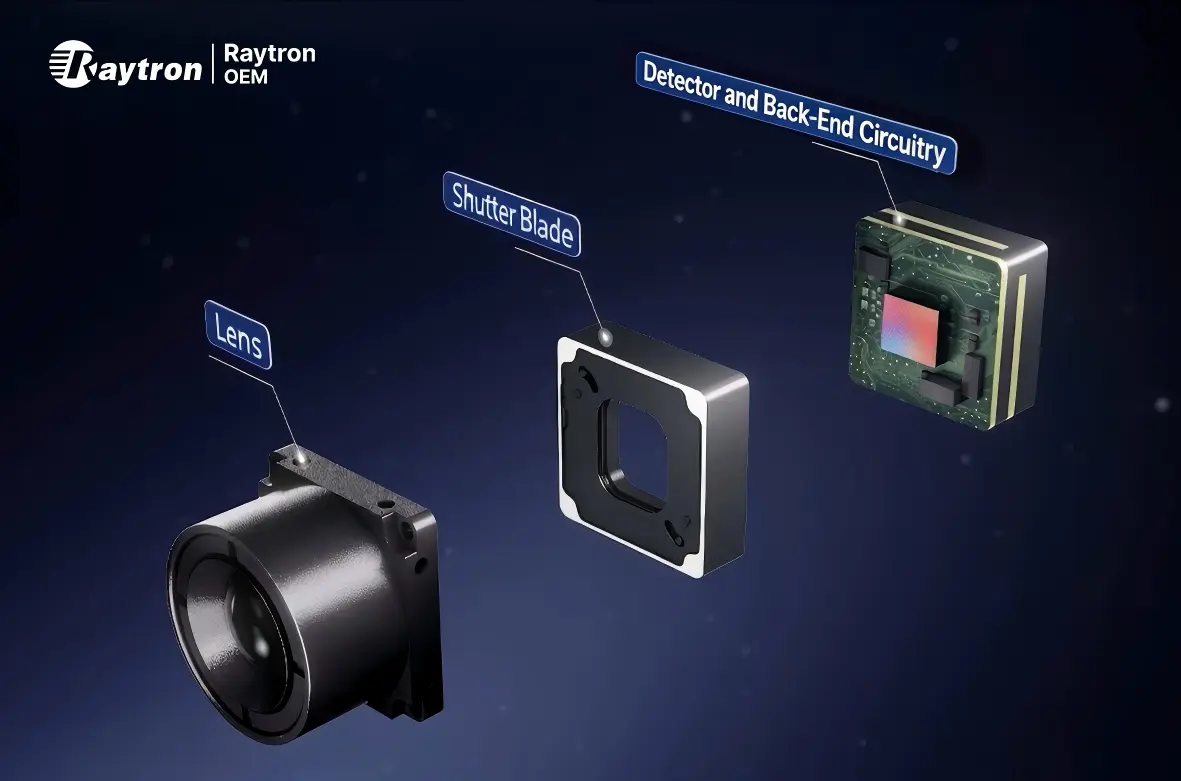
Currently, most infrared thermal imaging systems rely on a mechanical shutter blade to perform Non-Uniformity Correction (NUC) to compensate for detector response drift. When the shutter closes, the system typically holds the previous frame to mask the calibration process, resulting in a brief image freeze.
However, this approach has the following problems:
- The closing of the shutter causes a momentary image interruption, which affects image continuity and real-time applications;
- The shutter structure reduces system reliability and increases cost, size, weight, and power consumption.
Can the Shutter Be Removed Without Affecting Thermal Imaging Performance?
At CIOE 2026 (China International Optoelectronic Expo), Raytron’s detector and module brand, Raytron OEM, showcased its thermal imaging module with True Shutterless Technology. The shutterless module completely eliminates the mechanical shutter structure. Through a high-performance detector and multiple intelligent image algorithms, it maintains high-quality imaging across a wide operating temperature range of -40°C to +85°C.
On the detector side, optimized materials and circuit design improve the detector’s robustness to sun exposure and other intense thermal sources, aging resistance, and FPA response uniformity across temperature changes, fundamentally reducing the detector’s need for real-time shutter-based NUC.
On the module side, multiple image processing algorithms work together to correct detector-response drift: the Shutter-Less Algorithm, Burn-Erase Algorithm, Detector-Response Drift Calibration and Correction Algorithm, Time-Varying Aging Compensation Algorithm, NUC Algorithm, and Temperature Measurement Correction Algorithm.
Key Technologies:
- Enhanced detector performance: Detector-level improvements slow performance degradation and improve response stability over temperature;
- Time-Varying Aging Compensation Algorithm: It corrects accumulated drift in real time, keeping imaging consistent over the long term.
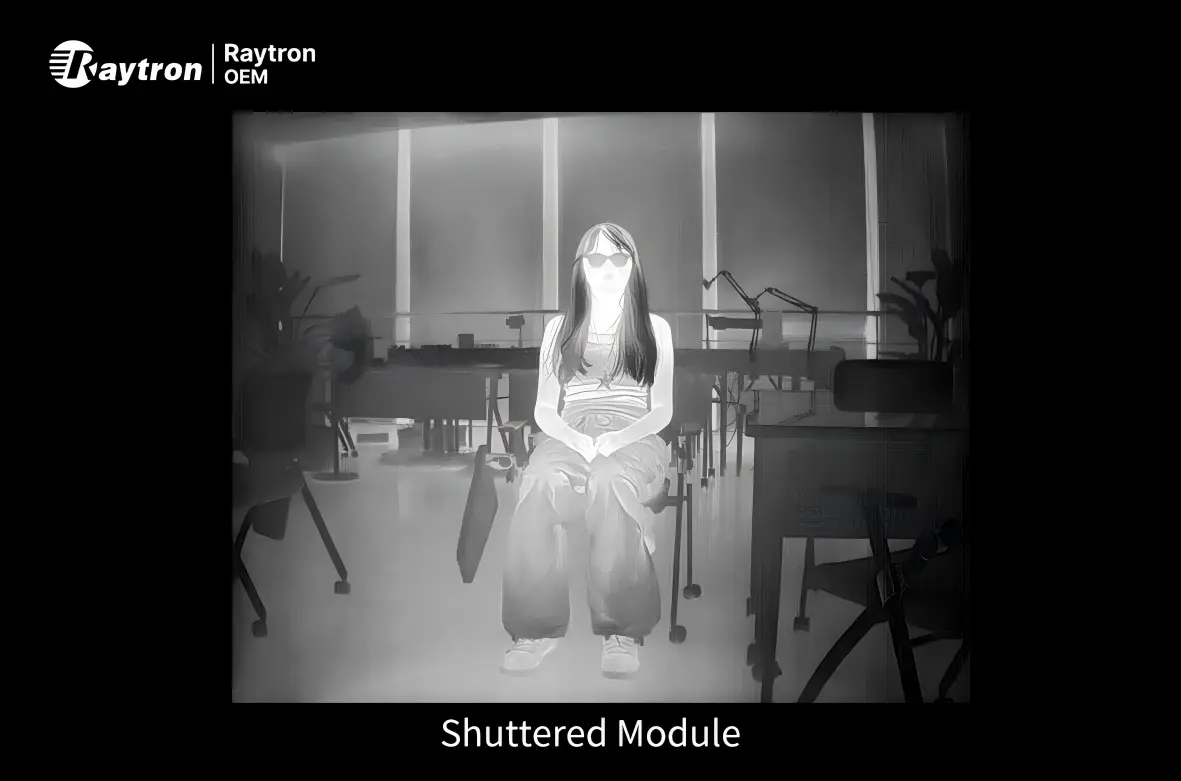
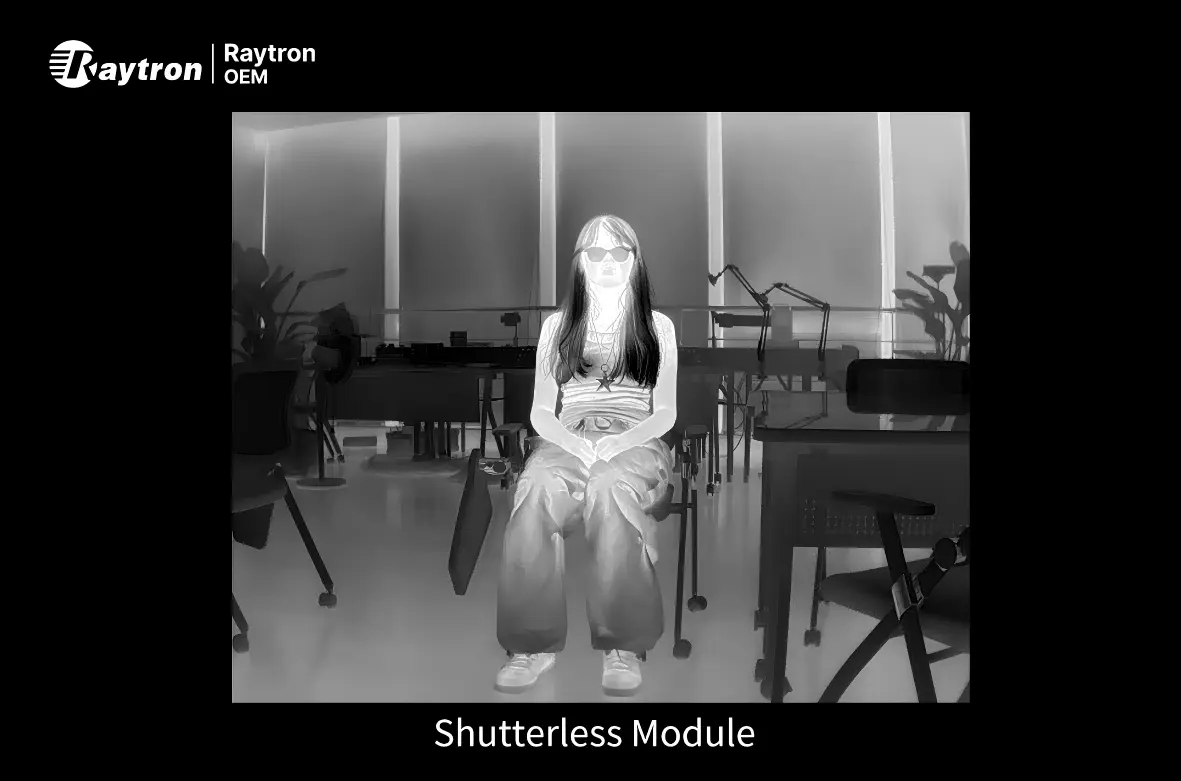
The images below compare the imaging performance of a shuttered module after a long period without shutter-based NUC and a shutterless module.
The Significance of Shutterless Technology
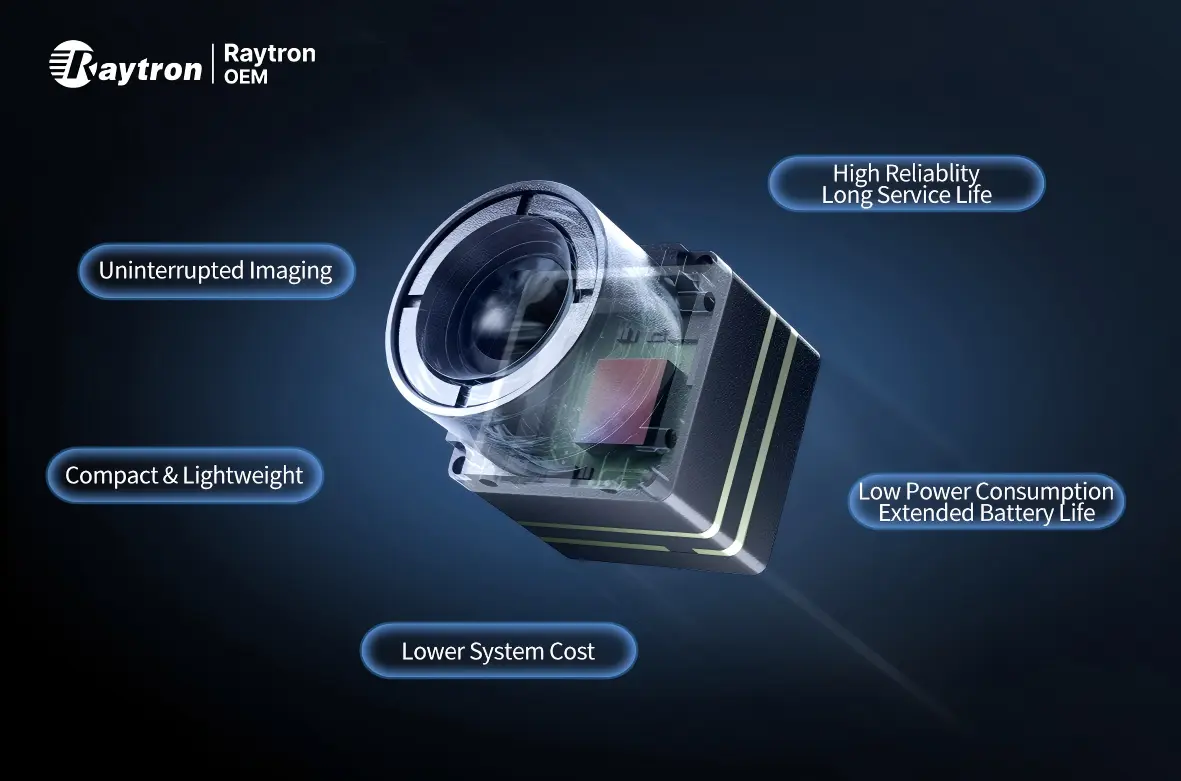
Shutterless technology improves infrared thermal imaging modules in several respects, including image continuity, module reliability, and service life, and delivers a better user experience in many real-world infrared thermal imaging applications:
Benefit 1: No Image Interruption—Essential for Video Streams and Real-Time Scenarios
By eliminating periodic “shutter calibration,” the module delivers 100% continuous image output, with no frozen frames and no dropped frames or missed detections in critical scenarios. It meets the needs of applications such as security monitoring (24/7 continuous operation), moving-object tracking (vehicle-mounted), industrial process control (where a missed detection can lead to an accident), and dynamic medical imaging.
Benefit 2: High Reliability / Long Service Life—A Hard Requirement for Industrial and Automotive Applications
Without a mechanical shutter structure, Mean Time Between Failures (MTBF) improves significantly, the module supports a wide operating temperature range of -40°C to +85°C (with no risk of shutter jamming), and its vibration and shock resistance is greatly enhanced. It meets the needs of applications with more stringent reliability requirements, such as automotive-grade applications, industrial online monitoring, and site protection.
Benefit 3: Small Size / Light Weight—The Physical Prerequisite for Module Miniaturization
With the shutter structure removed, the module can be made thinner and its weight is reduced accordingly. This meets the needs of more end products with strict space and weight constraints, for example: handheld temperature measurement devices (smartphone temperature measurement / consumer electronics), wearables (smart glasses / safety helmet integration), civilian micro-drone payloads, and in-vehicle Advanced Driver Assistance Systems (ADAS) and the automotive aftermarket.
Benefit 4: Lower System Cost—The Material Basis for Lower Prices
Removing the shutter assembly takes it out of the Bill of Materials (BOM), simplifies the structural design, and saves tooling and assembly costs. This allows infrared thermal imaging technology to be adopted in a wider range of products, such as consumer-grade temperature measurement products, entry-level outdoor handheld devices, and mass-market consumer electronics.
Benefit 5: Low Power Consumption / Long Battery Life—A Hard Requirement for Battery-Powered Scenarios
Eliminating the shutter drive motor reduces the energy consumed per calibration to zero and lowers the module’s overall power consumption, significantly extending battery life for portable devices and mobile terminals.
As a leader in infrared thermal imaging, Raytron OEM continues to pursue its mission of creating incremental value for customers through technological progress. “No mechanical shutter” may seem like merely “removing one component,” but it is in fact the key watershed for uncooled infrared thermal imaging modules moving from “industrial instruments” to “consumer electronics”—it brings infrared technology down from professional equipment into a much broader range of consumer applications. Raytron OEM is committed to turning infrared from specialized equipment into an ever-present sensing capability, so that the benefits of technological progress truly reach every end user.